

That is the normal order here.
Research groups, instrument builders and startups do not order a hundred of anything. They need one mount, one fitting, one holder, and they need it before the experiment runs. No minimum order, and no explaining why the quantity is one.
Minimum order one part · Works from a sketch · Quotes next business day
The machining is rarely what delays a lab order. The paperwork is. You get a written quote itemised the way a purchasing office expects to see it, held long enough to clear an approval chain. Purchase orders from universities and research institutions are welcome, with no account to open and no minimum spend, and if your office needs a W-9 or a sole-source justification it comes back the same day. If a grant line has to be spent by a date, say so with the sketch and the schedule gets planned around it.
undefined
Hardware machined for research groups at a major research university. The experiments are theirs to publish; they are not ours to describe.
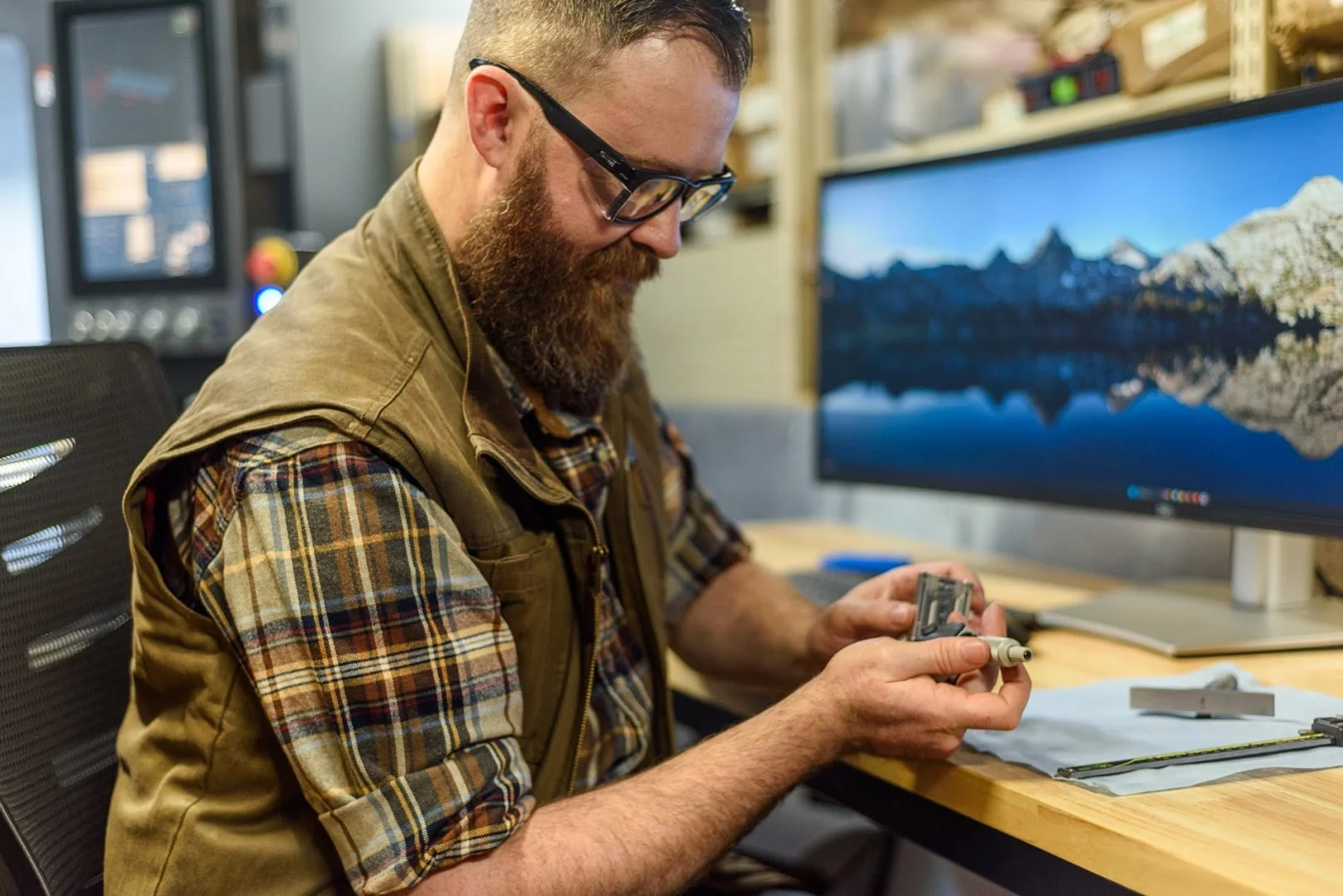
Parts for people building measurement and test equipment, usually before the design has settled.
If your hardware is attached to research that has not been published, an NDA sent with the RFQ comes back signed.
Lab hardware almost never starts as a finished drawing. It starts as something that does not exist yet, or something that broke. These are the shapes that request usually arrives in.
| The problem on the bench | What usually gets made |
|---|---|
| The commercial part exists, but not in this size or thread | A one-off adapter, spacer or mount cut to the dimension the rig actually needs. |
| Every experiment needs a different sample holder | A holder made to the sample, and the fixture kept here, so the next variant is a change to one dimension. |
| A part of the rig broke and the maker is long gone | The broken original gets measured here and the replacement is cut from it. Bring it even if it is in two pieces. |
| The design only exists on a whiteboard | Send a photo of the whiteboard. That is a normal starting point here and usually enough to quote from. |
Stainless 316 where corrosion resistance matters. Aluminum 6061 for structure, mounts and plates. PTFE and PEEK for chemical and thermal work. Brass and copper. Delrin and UHMW. 17-4 PH where a part takes load.
Mounts, stages and adapters that have to locate something precisely and then not move.
Holders, clamps and jigs built around the specimen rather than the other way round.
The part that broke, or the adapter that makes two pieces of equipment talk to each other.
Usually, yes. Put the critical dimensions on it and note what the part has to fit or locate against. We will ask about anything ambiguous rather than assume.
Yes. Measuring an existing component and reproducing it is regular work here, whether the original drawing is lost or never existed.
Yes. The minimum order has always been one part, and lab work is mostly ones.
Often, and it is frequently cheaper. Send us both what you have and what it needs to do.
Yes. Quotes come back the next business day in writing with the detail procurement usually asks for.
Yes, and we would rather do it before cutting. Tolerances applied everywhere and geometry that forces extra setups are the two most common costs, and both are usually easy to fix at the design stage.
Quotes come back the next business day. The minimum order is one, and you will be talking to the machinist who cuts it.