

Fixtures, tooling, and the awkward single part.
When a job needs workholding nobody wants to design, or a replacement component that has to exist by Thursday, it lands here. We machine it, inspect every one by hand, and keep the fixture afterwards so the next batch sets up the way the first one did.
Minimum order one part · Shop opens 6 AM · Quotes next business day
Machine shops call us. When a job needs workholding they have not got time to design, or a fixture plate for a run that is already late, it goes out — and it goes to a shop that builds its own. That is what this one does.
The same is true of tooling, test stands, inspection fixtures, and the single replacement component holding up a build. Low quantity, awkward geometry, needed sooner than is comfortable.
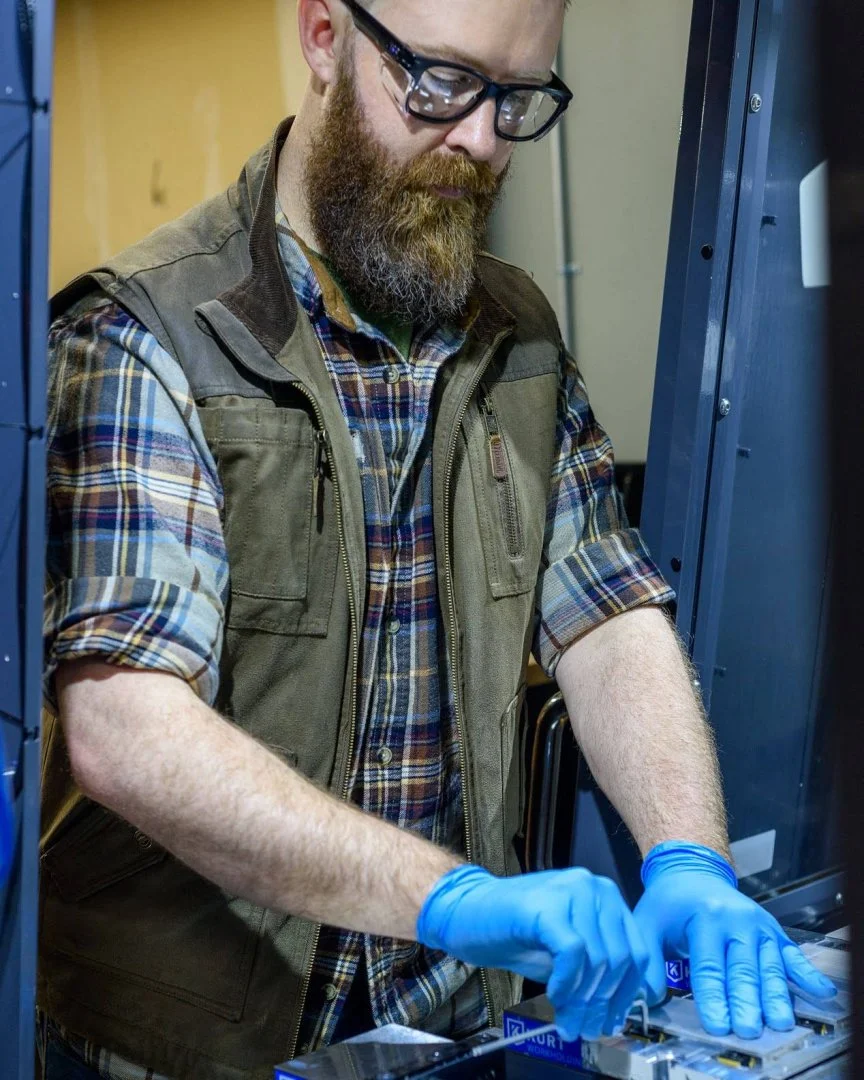
Fixtures are designed and cut here rather than outsourced, and they stay here afterwards, so a repeat order does not pay to solve the same locating problem twice.
Completed under non-disclosure. We can tell you how the work is done, not who it was for.
Also under NDA. In both sectors that restriction comes with the territory, and it is a reasonable price for the work.
NDAs are routine here. If you would rather have one in place before we look at a drawing, send it over first.
Most of this work arrives as a print rather than a conversation. Here is how the callouts get read.
| On the print | What happens here |
|---|---|
| Datum structure and true position callouts | The fixture locates on the same datums the print works from, so machining and inspection agree instead of arguing. |
| ±0.0001″ on two features, general profile everywhere else | Priced that way. Tight where it earns its keep, open where it does not — and we will say so if the whole print is toleranced tight by habit. |
| A finish spec we do not run | You hear that at quote stage, not after. Either it goes to a vendor we use or it comes back to you to source — your call, made early. |
| A paper print from the 1980s and no model | The part gets measured and re-drawn before anything is cut. The drawing goes back to you with the parts. |
| No print at all, just the component that broke | Reverse engineered from the part. That is a normal job here, not an exception. |
| Quantity of one, needed by Thursday | Also normal. The shop opens at 6 AM and the minimum order has always been one. |
Aluminum 6061 and 7075 for fixtures, brackets and plates. Carbon steels and mold steels where workholding has to survive repeated clamping. Stainless 303, 304, 316, 420, 440 and 17-4 PH. Titanium. Brass, bronze and copper. Delrin, PEEK, UHMW and PTFE.
Five questions, and the answers usually change the price more than the material does. If you already know them, the quote comes back faster.
Send it anyway. A five-minute call with the machinist who would cut the part is worth more than a form, and it is usually enough to tell you whether this is the right shop for the job.
Yes. Fixtures and tooling for other shops’ jobs are regular work here. If you run a shop and a job needs workholding you have not got the hours to design, that is a normal call to make.
Yes. Bring the part. Measuring an existing component and working from that is routine — it is the same process as any reverse engineering job.
Yes, and at no extra charge. The first batch carries the fixture cost. After that it sits on the shelf here, so the second order sets up the same way and does not pay for it again.
We work inside your approved-supplier process, the same way we manage outside finishing vendors on a single order. Tell us what the program requires and we will tell you exactly where we fit and what would need a certified partner alongside us.
Yes, and we would rather sign one first than have you send a drawing you are uneasy about. A good deal of the work here is covered by them.
One part. That is not a concession for prototypes, it is how the shop is set up.
Quotes come back the next business day and the shop opens at 6 AM. Lead time depends on the part and on the fixture, if one is needed — ask, and you will get a real date rather than an optimistic one.
No, that is normal here. A paper print gets read as drawn, and where dimensions are missing or the part has been revised in service, we measure the existing component and work from that. Reverse engineering an obsolete part is regular work, not an exception.
Anodizing, plating, passivation, heat treatment, bead blasting and laser marking are coordinated through qualified outside vendors on your order, and parts come back here for inspection before they ship. Send us the finish callout on the print and we will tell you straight whether it is one of ours or one you should source yourself.
Raise it with us at quote stage. If your contract carries a domestic-melt or specialty-metals clause, that changes where material is bought and what documentation has to come with it, and it is much easier to source correctly at the start than to substitute later.
A drawing, a model, or the component itself. Quotes come back the next business day, the minimum order is one part, and you will be talking to the machinist who cuts it.